
21 lessons
Network Bytes
Networking from zero, one minute at a time. Follows the Cisco CCNA 200-301 exam topics.
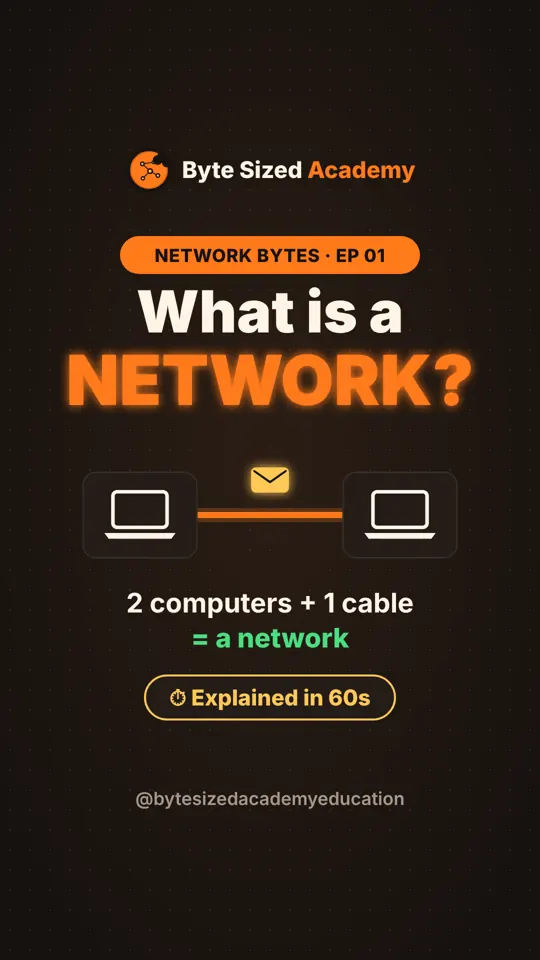 Network Bytes · EP01
What is a network?
Two devices and one cable is all it takes. From your home Wi-Fi to the whole internet, it's networks all the way up.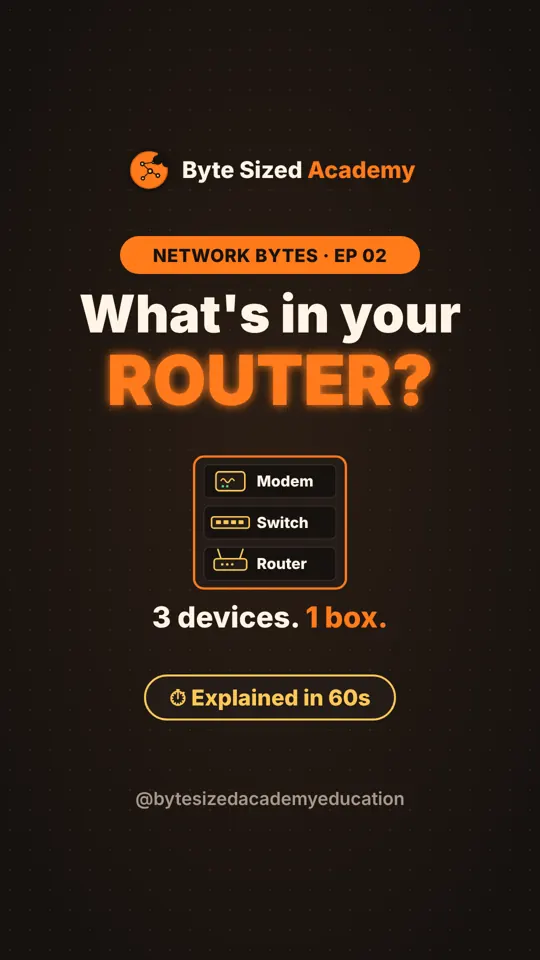 Network Bytes · EP02
Router vs switch vs modem
That "router" on your shelf is usually three devices in a trench coat. Here's what each one does.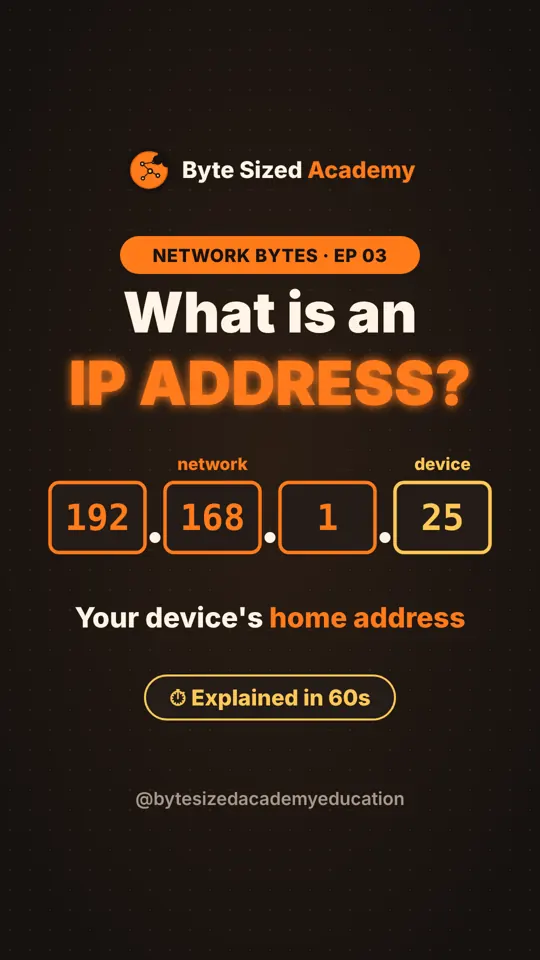 Network Bytes · EP03
What is an IP address?
Every device online has an address, just like your house. Here's how to read one.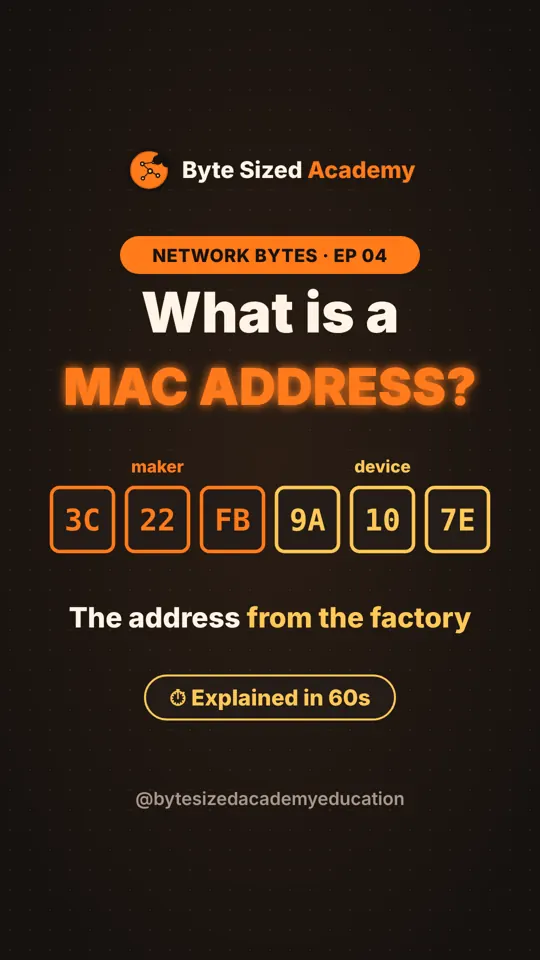 Network Bytes · EP04
What is a MAC address?
Your phone has two addresses, and one of them came from the factory. Here's what it is and how it works with your IP address. Network Bytes · EP05
Public vs private IP
Google has never seen your laptop's IP address. Here's the difference between private addresses inside your home and the one public address the internet sees. Network Bytes · EP06
What is DNS?
Your computer has no idea what "google.com" means. DNS, the internet's contacts app, turns the names you type into the IP addresses computers use.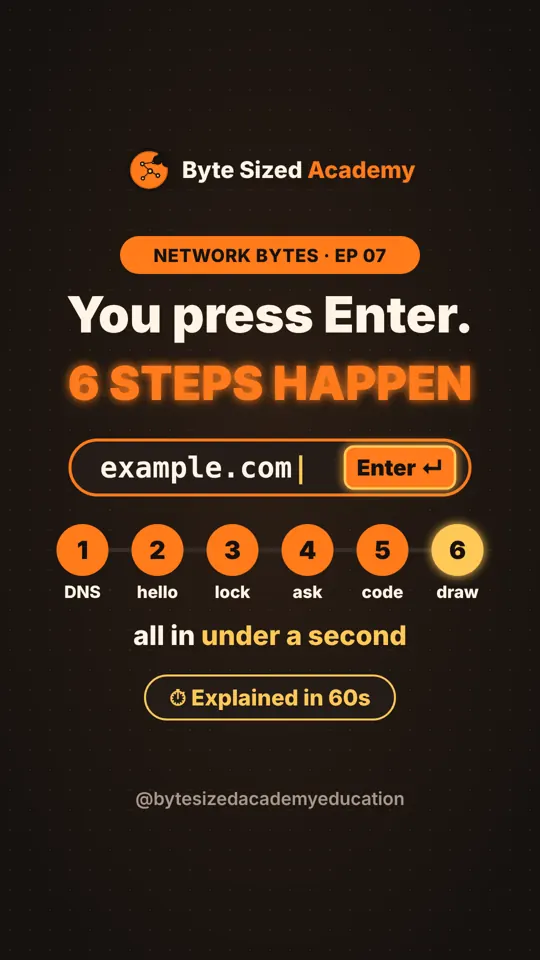 Network Bytes · EP07
What happens when you type a URL?
You type a web address and press Enter. Here are the six steps that happen before the page appears, often in well under a second. Network Bytes · EP08
What is a packet?
Your streaming movie doesn't arrive in one piece. It arrives as thousands of small packets, each labeled with where it's from, where it's going and which piece it is.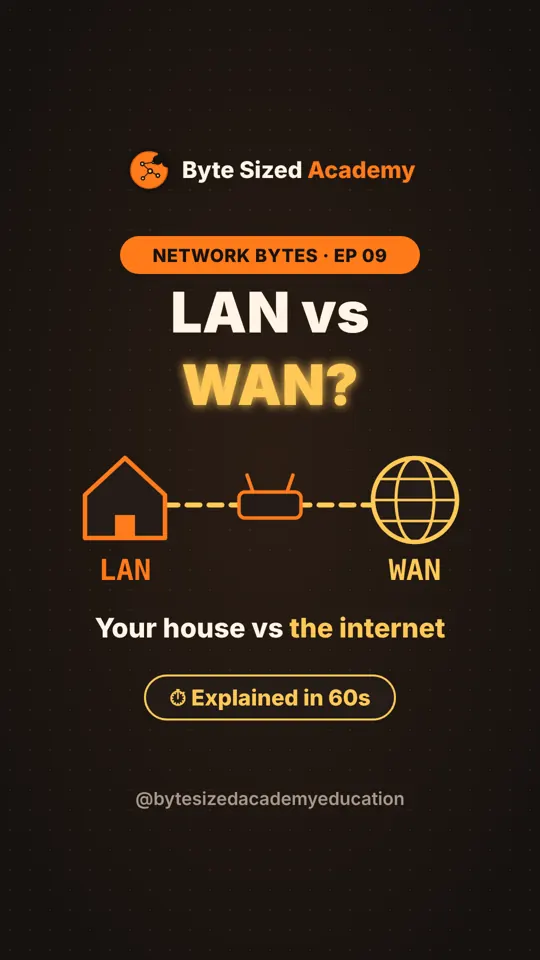 Network Bytes · EP09
LAN vs WAN
Your house is a LAN. The internet is a WAN. Here's the difference between a local area network and a wide area network, and where your router fits.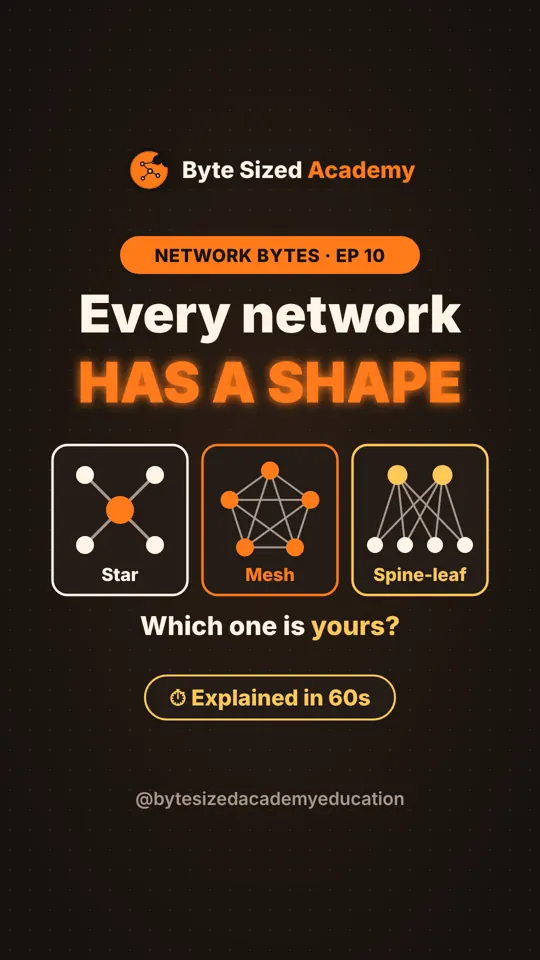 Network Bytes · EP10
Network topologies
Every network picked a shape. Here's how star, mesh and spine-leaf networks are wired, and what each one is good at.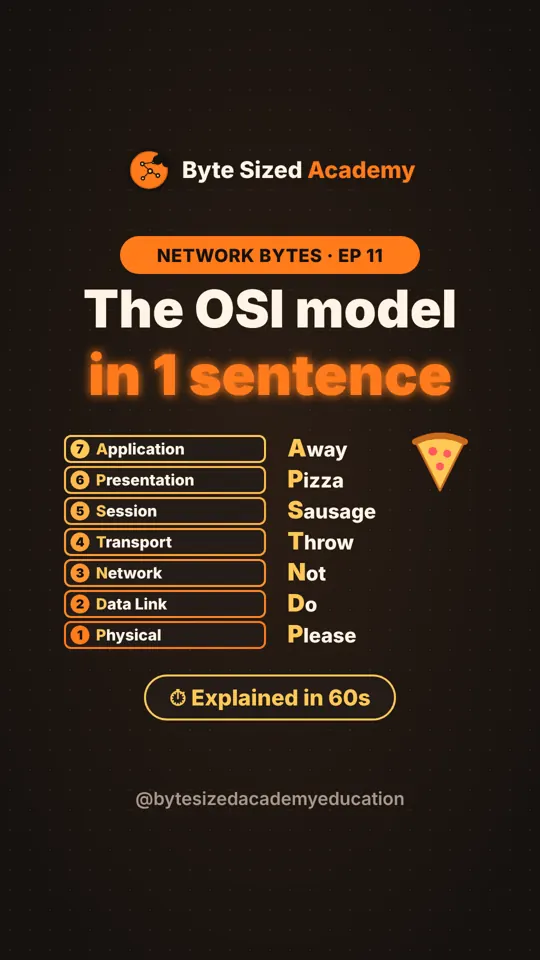 Network Bytes · EP11
The OSI model: 7 layers
Every message you send goes down seven layers and back up seven on the other side. Here's what each OSI layer does, and one silly sentence to remember them all.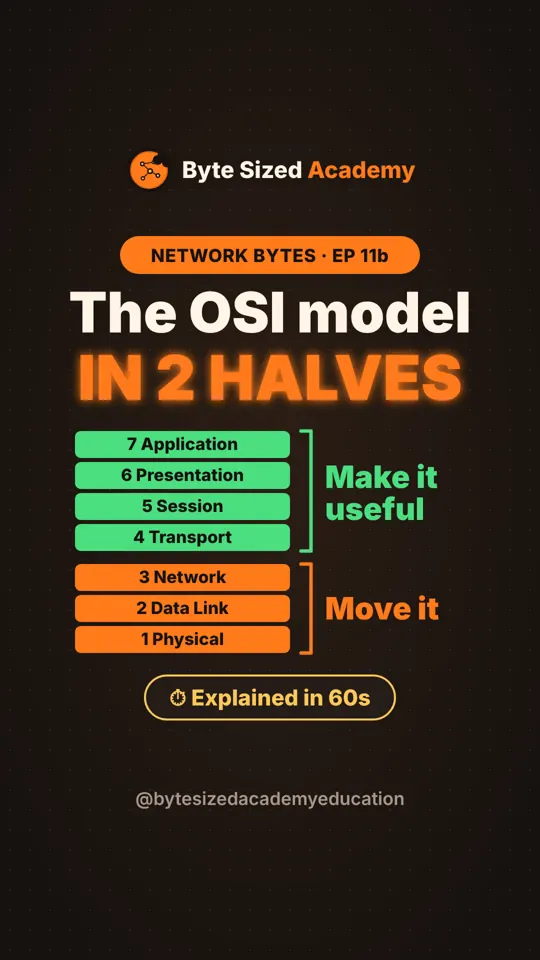 Network Bytes · EP11b
OSI: the two halves
The bottom three OSI layers move your data across the network. The top four only run on the two ends, your device and the server, and make that data useful.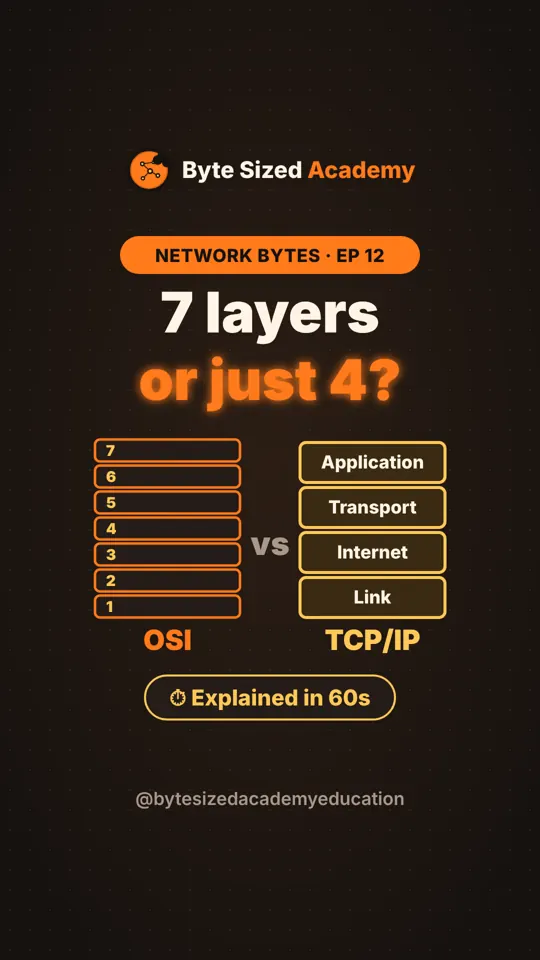 Network Bytes · EP12
TCP/IP vs OSI
There's the networking model you learn, with seven layers, and the one the internet actually runs on, with four. Here's how the TCP/IP model maps onto OSI.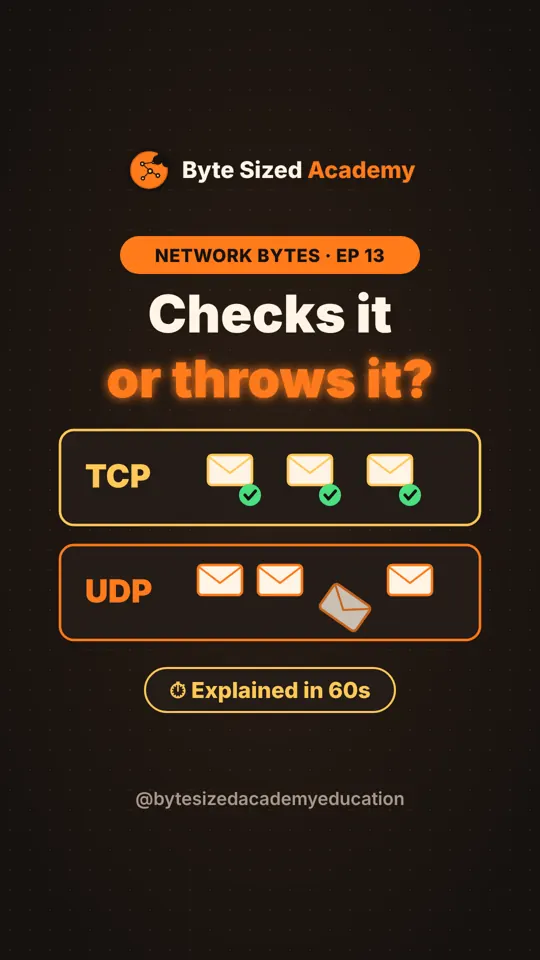 Network Bytes · EP13
TCP vs UDP
Both carry your data across the internet. TCP checks every delivery and resends what's lost; UDP just fires packets and keeps going. Here's when each one wins.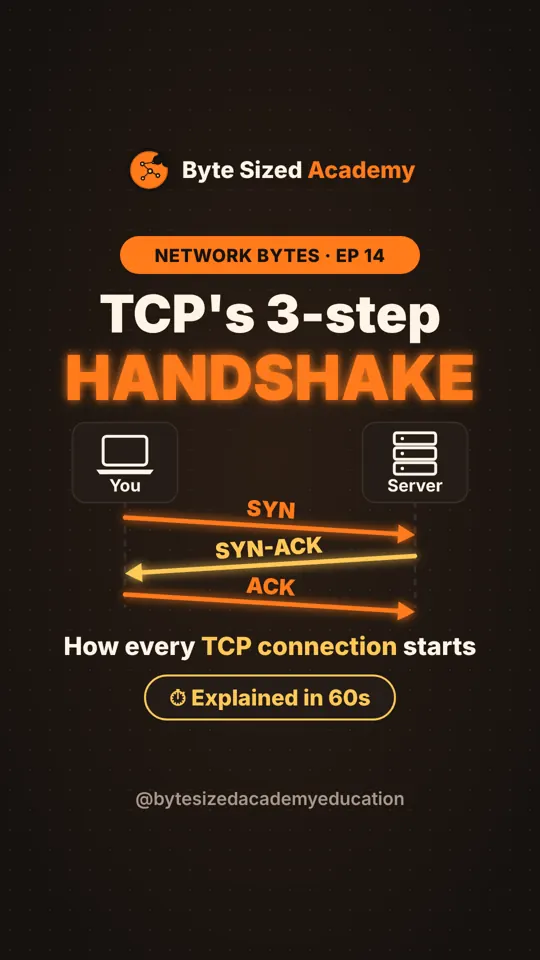 Network Bytes · EP14
The TCP three-way handshake
Almost every website you open starts with a three-step greeting. Here's how TCP's SYN, SYN-ACK and ACK set up a connection, and how TCP resends anything that gets lost.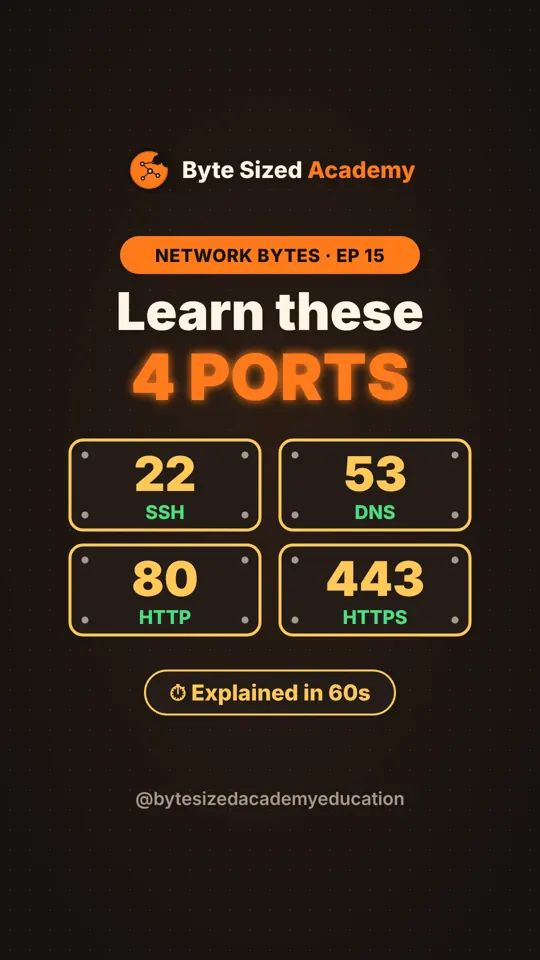 Network Bytes · EP15
Ports and common port numbers
An IP address gets data to the right device; a port number gets it to the right app. Here are the four port numbers to learn first.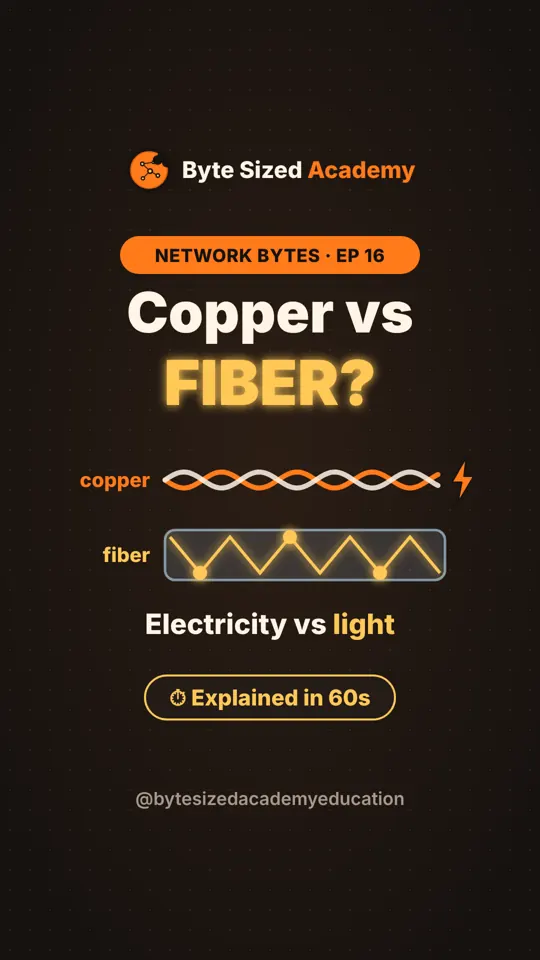 Network Bytes · EP16
Ethernet cables: copper vs fiber
Most network cables carry electricity over twisted copper wires. Fiber carries flashes of light through a hair-thin strand of glass, so it goes much farther and ignores electrical noise.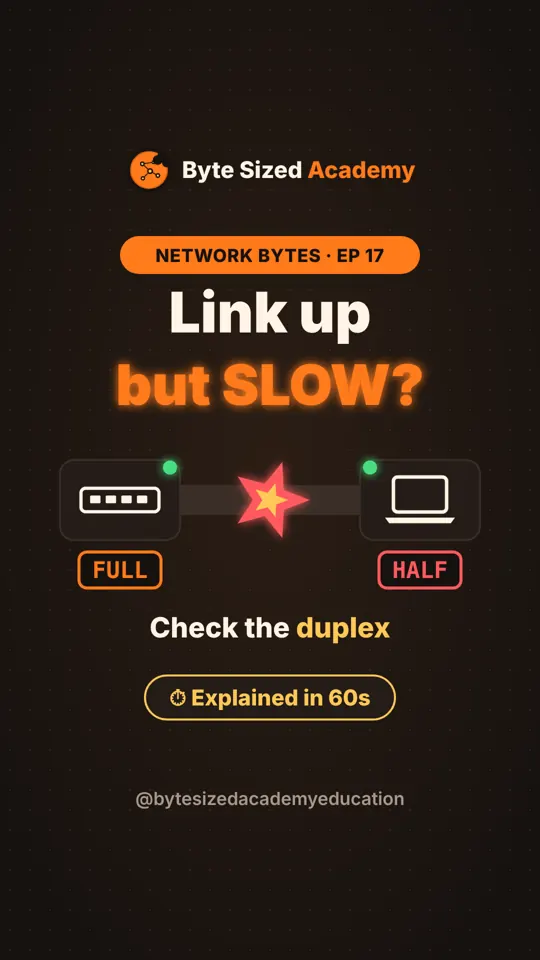 Network Bytes · EP17
Duplex and speed mismatch
Your link is up, but everything crawls. Here's how full and half duplex work, why setting one end by hand causes a duplex mismatch, and the simple fix.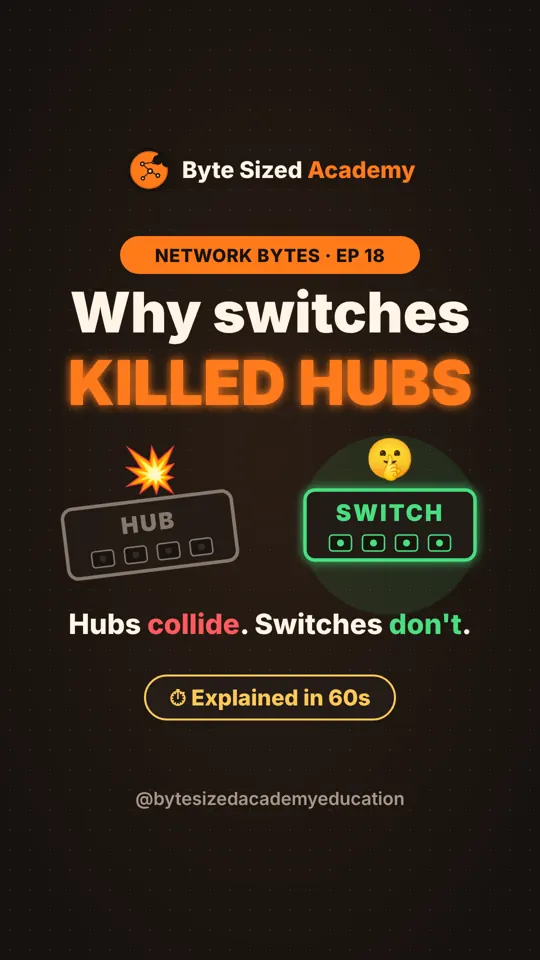 Network Bytes · EP18
Collisions and why switches killed hubs
Hubs copied every message to every device, so signals crashed into each other. Here's what a collision is and how switches made them history.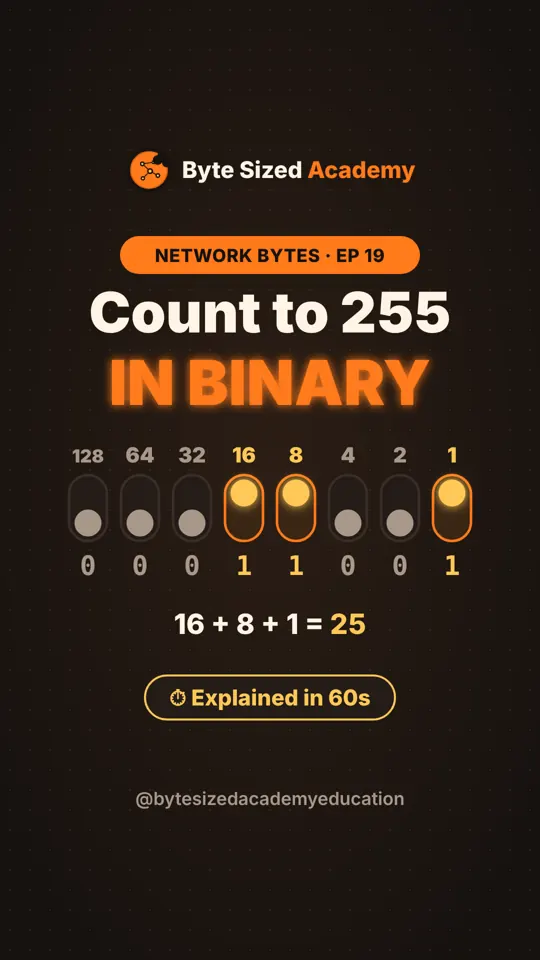 Network Bytes · EP19
Binary in 60 seconds
To read an IP address like a router, you only need to count to 255 in binary. Here's how eight bits make one byte, and why every part of an IP address is between 0 and 255. Network Bytes · EP20