
9 lessons
Circuit Bytes
Circuits and electronics from zero, one 60-second idea at a time, from what electricity is to how real circuits work.
 Circuit Bytes · EP01c
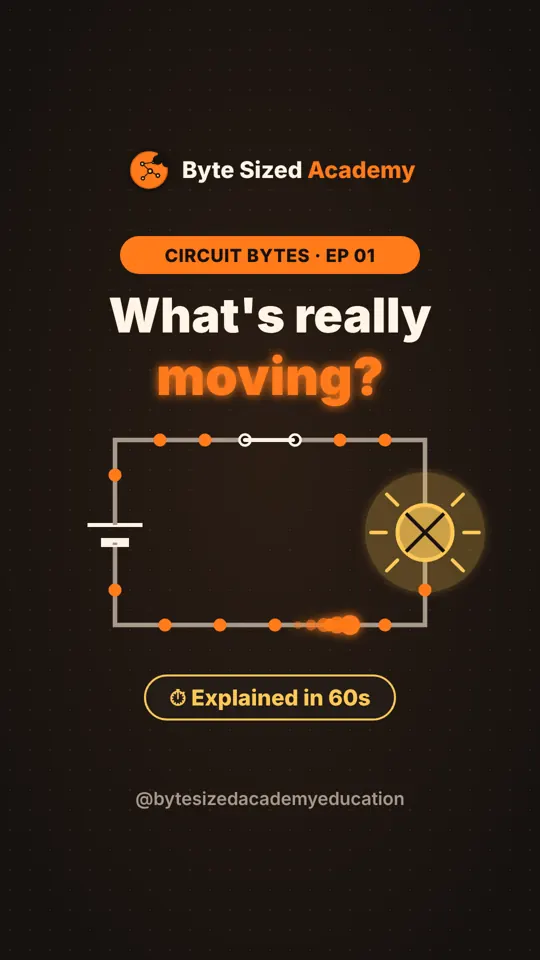
What is electricity?
Electricity isn't stuff pouring out of the wall. It's the push on electrons that are already in the wire, and the energy that push carries.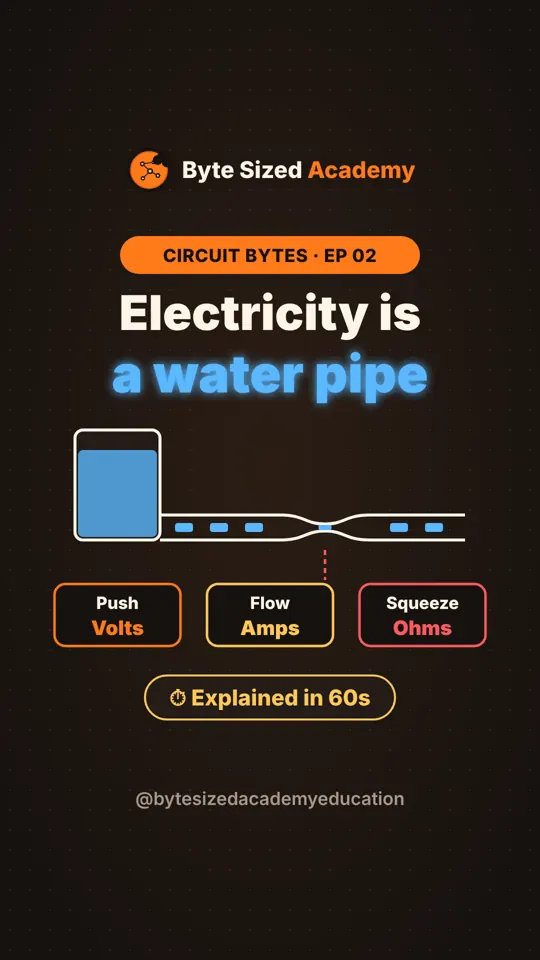 Circuit Bytes · EP02c
Voltage, current and resistance
Every circuit has a push, a flow and a squeeze. The water-pipe picture makes voltage, current and resistance easy to remember.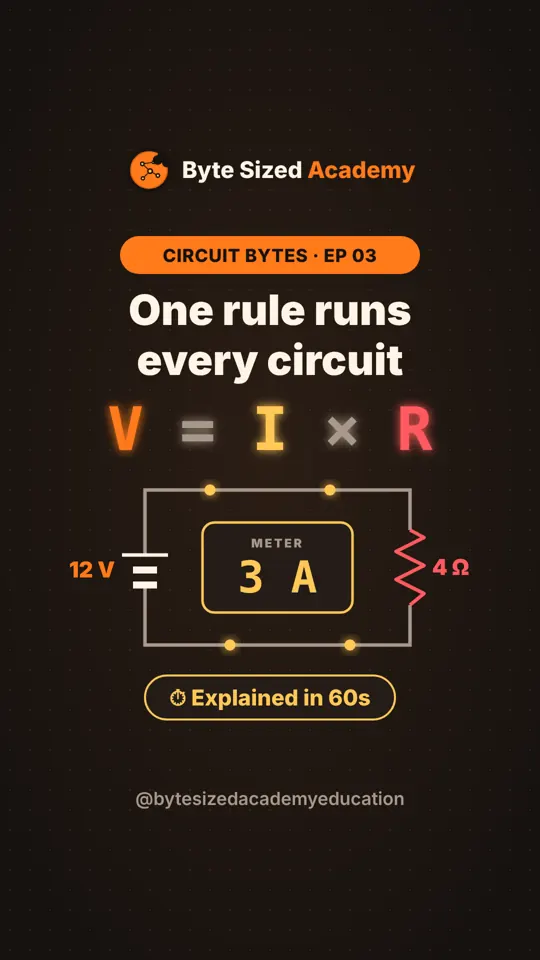 Circuit Bytes · EP03c
Ohm's law
V = I × R ties voltage, current and resistance together. Know any two and you can work out the third.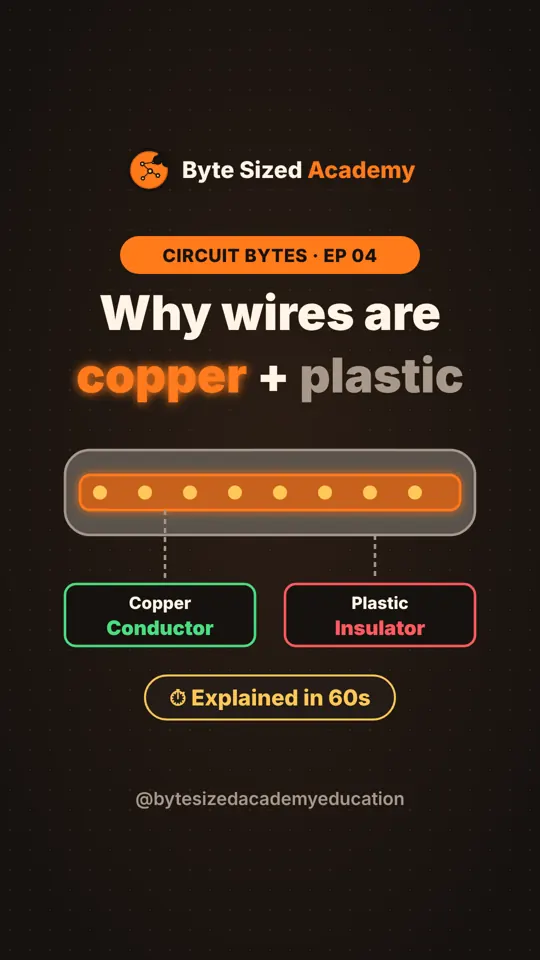 Circuit Bytes · EP04c
Conductors vs insulators
Wires are copper on the inside and plastic on the outside because copper lets electrons flow easily and plastic holds them tight. One conducts, one insulates.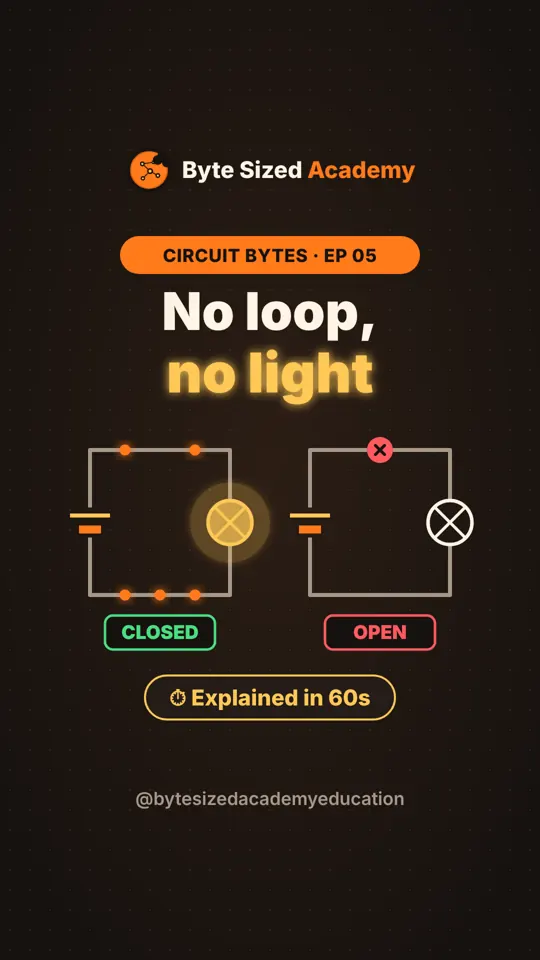 Circuit Bytes · EP05c
What makes a circuit
Current only flows when there's a complete loop from one end of the battery back to the other. Any gap opens the circuit, and a light switch is just a gap you control.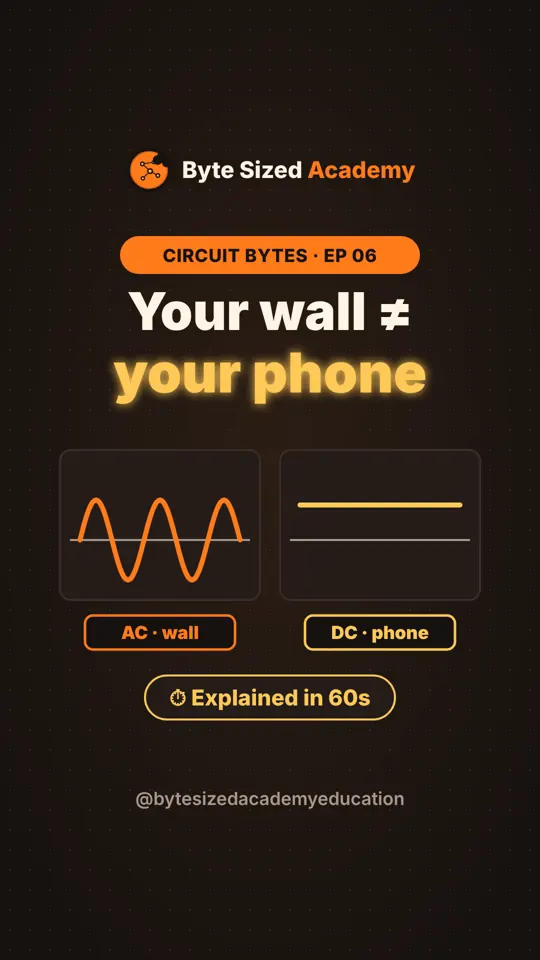 Circuit Bytes · EP06c
AC vs DC
A battery gives direct current that pushes one way; your wall gives alternating current that swings back and forth. The grid uses AC because transformers can step its voltage up and down, and your charger turns it back into DC.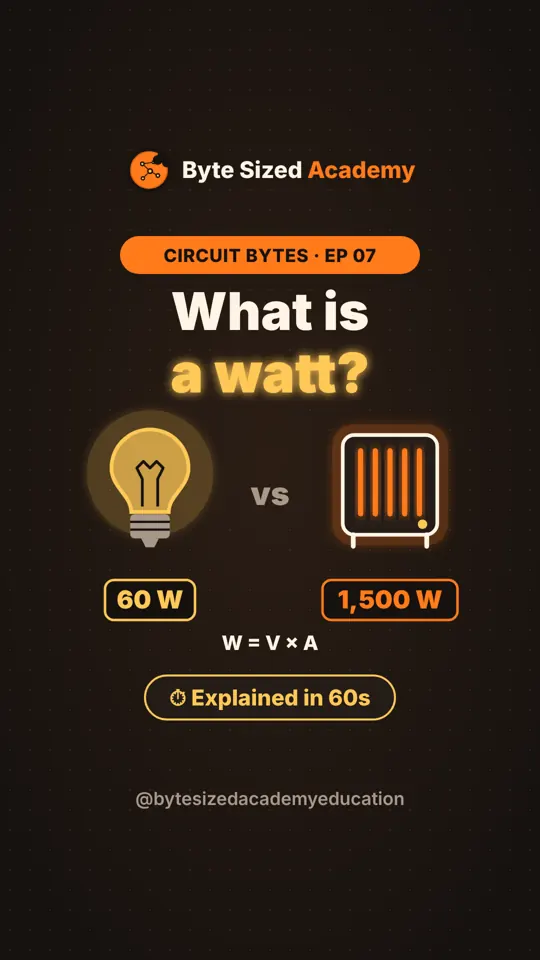 Circuit Bytes · EP07c
Power: watts
A watt measures power, how fast something uses energy. For electricity, watts equal volts times amps, which is why a 1,500 W heater uses 25 times the energy of a 60 W bulb every second.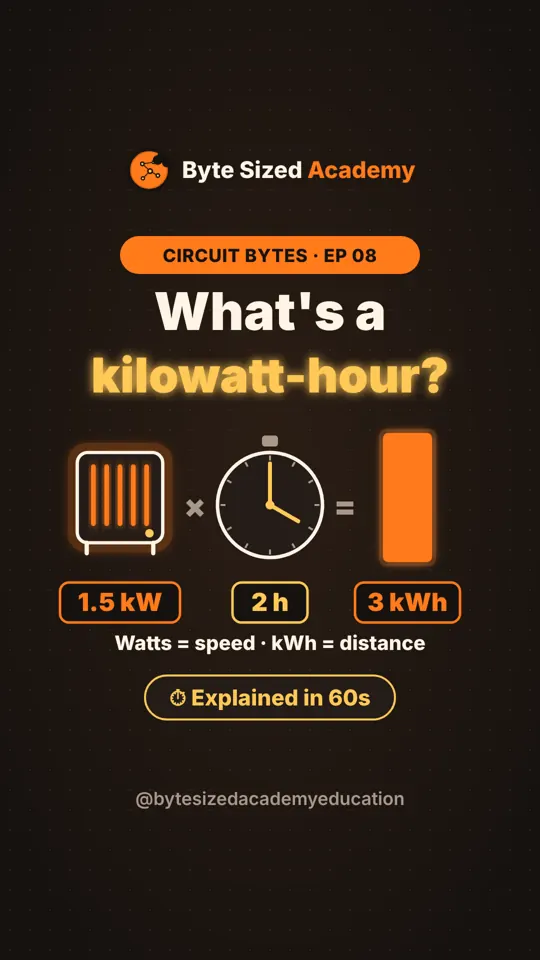 Circuit Bytes · EP08c
Watts vs kilowatt-hours
Watts measure how fast something uses energy; your power bill charges for the total energy, in kilowatt-hours. Run 1,000 watts for one hour and you've used one kilowatt-hour. Circuit Bytes · EP09c